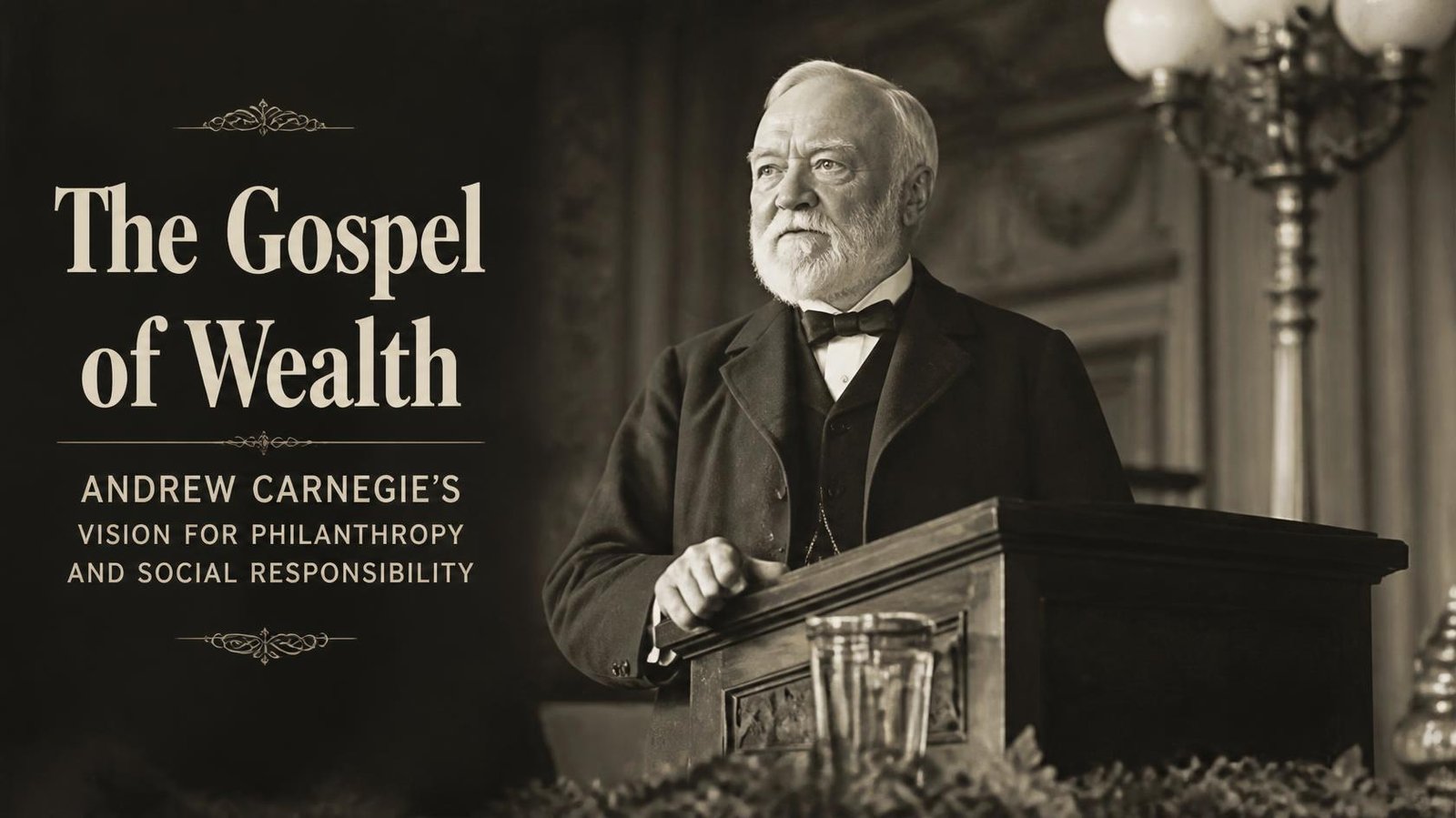
The Gospel of Wealth
Published in the North American Review in June 1889, Carnegie argued that surplus wealth accumulated by self-made industrialists is best administered during their lifetime for the lasting benefit of the public.
Full Transcript
The problem of our age is the proper administration of wealth, so that the ties of brotherhood may still bind together the rich and poor in harmonious relation. The conditions of human life have not only been changed, but revolutionized, within the past hundred years.
There are but three modes in which surplus wealth can be disposed of. It can be left to the families of the decedents; or it can be bequeathed for public purposes; or, finally, it can be administered during their lives by its possessors.
The first is the most injudicious. Why should men leave great fortunes to their children? If this is done from affection, is it not misguided affection?
The true administrator of wealth regards all surplus revenues which come to him simply as trust funds, which he is called upon to administer, and strictly bound as a matter of duty to administer in the manner which, in his judgment, is best calculated to produce the most beneficial results for the community.
The man who dies thus rich dies disgraced.
Defining Key Excerpts
"The man who dies thus rich dies disgraced."
"This then, then, is the duty of the man of Wealth: To set an example of modest, unostentatious living... and to consider all surplus revenues which come to him simply as trust funds."
Bring this Speech to your Wall
Get this historic speech professionally typeset, printed on structured canvas, and delivered in a solid wood frame.