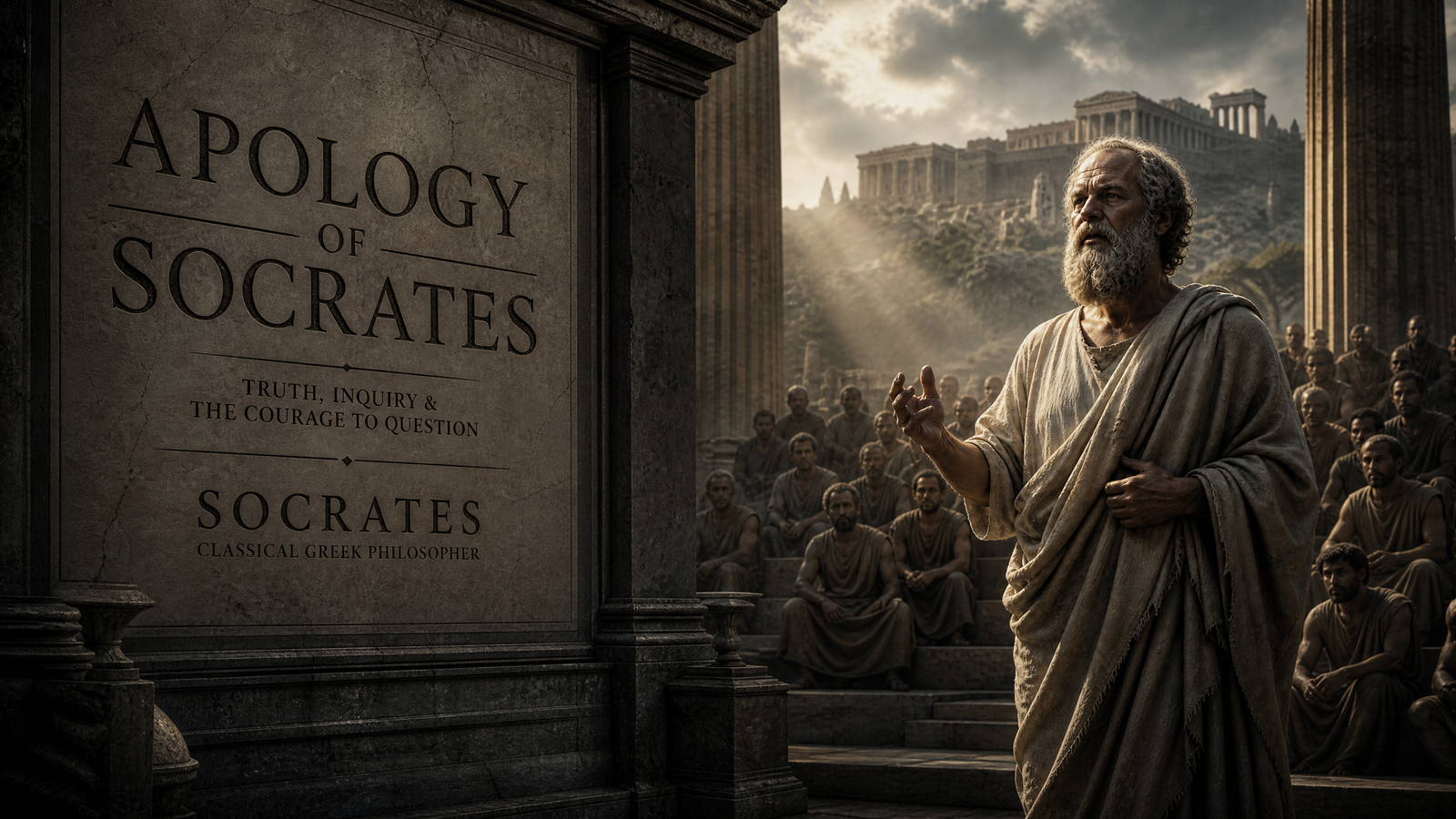
Apology of Socrates
Plato's account of the defense speech given by Socrates in 399 BCE at his trial in Athens, where he was charged with corrupting the youth and impiety.
Full Transcript
How you, O Athenians, have been affected by my accusers, I cannot tell; but I know that they almost made me forget who I was—so persuasively did they speak; and yet they have hardly uttered a word of truth.
I am called wise, because my hearers always suppose that I myself possess the wisdom which I find wanting in others: but the truth is, O men of Athens, that God only is wise; and by his answer he intends to show that the wisdom of men is worth little or nothing.
Someone will say: Yes, Socrates, but cannot you hold your tongue, and then you may go into a foreign city, and no one will interfere with you? Now I have great difficulty in making you understand my answer to this. For if I tell you that this would be a disobedience to a divine command, and that therefore I cannot hold my tongue, you will not believe that I am serious; and if I again say that the greatest good of man is daily to converse about virtue, and that the unexamined life is not worth living, that you are still less likely to believe.
The hour of departure has arrived, and we go our separate ways—I to die, and you to live. Which is better God only knows.
Defining Key Excerpts
"The unexamined life is not worth living."
"I know that I am intelligent, because I know that I know nothing."
"The hour of departure has arrived, and we go our separate ways—I to die, and you to live. Which is better God only knows."
Bring this Speech to your Wall
Get this historic speech professionally typeset, printed on structured canvas, and delivered in a solid wood frame.